
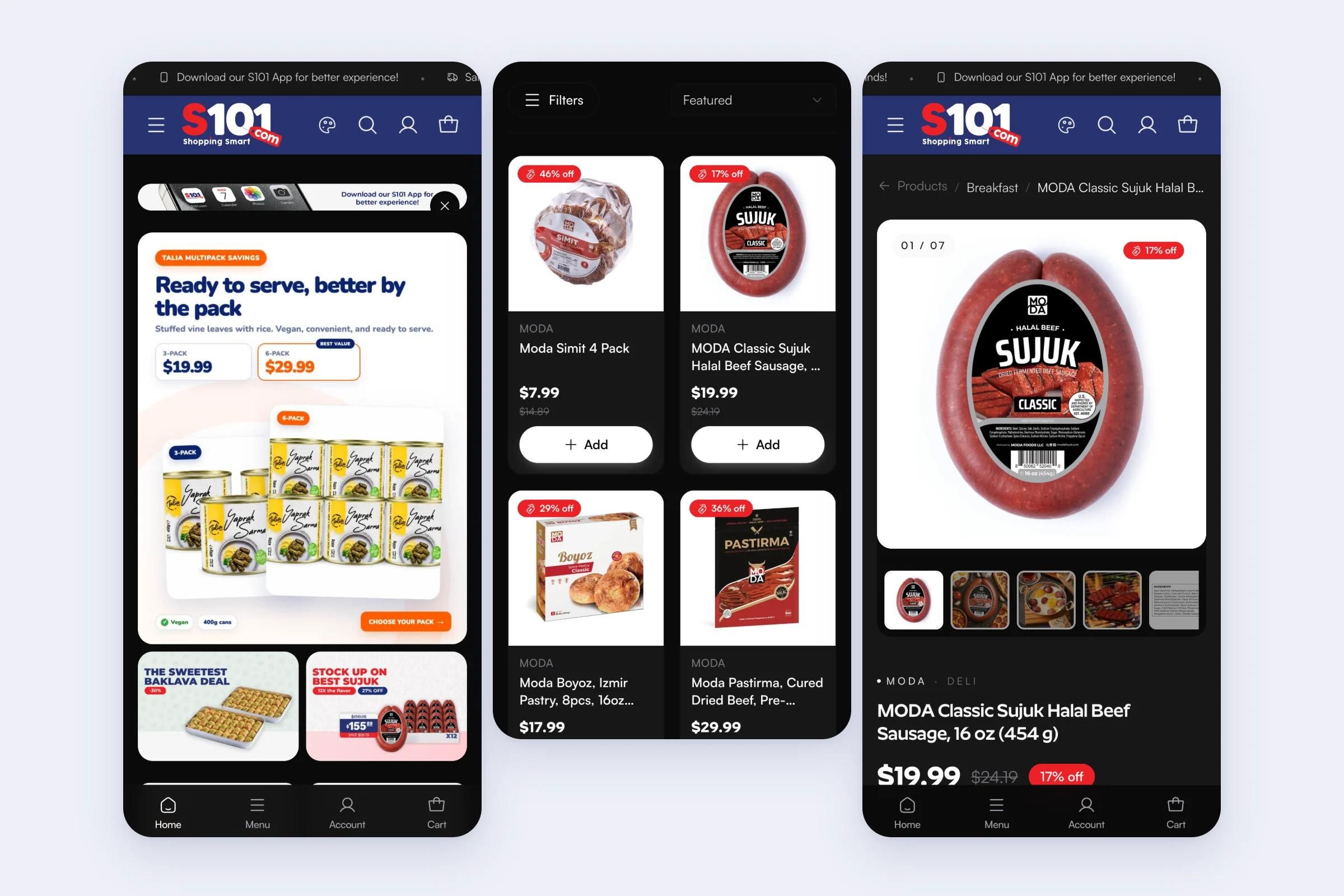
S101
Shopify design and development, mobile apps, custom web app
Industries
Resources

Trusted by B2B and premium service brands in 17+ countries.


About this
When a product needs real application logic, custom data models or integrations a site builder cannot carry, we build it in React, Next.js and Node. Architecture is scoped and agreed before anyone writes a line of code, so you know what you are getting and why.
Before you read further
Custom development is for web applications, mobile apps and other real products: software with user accounts, its own data model and integrations with the systems you already run. If you only need marketing pages, a site builder will be faster and cheaper, and we will tell you so.
Custom Development
The common failure is forcing a complex product into no-code: the marketing site went well, so a client portal gets built on top of it, then it needs permissions, then it needs to talk to the CRM, and every new requirement adds another workaround until the workarounds start breaking each other.
The quieter, more expensive failure is jumping to custom without scoping the architecture. Code gets written before anyone agreed what the system had to do. Six months later the build works but nobody on your team can safely change it. You do not own a product, you own a dependency.
We scope the architecture before anyone writes code: what the product has to do, the data model, the integrations and who will look after it. You get code and documentation your own team or another developer can pick up, so the product stays yours. If it starts life as an AI-built prototype, AI to custom development takes it from there.
Why Urest
Only the things we can verify.
We are a Certified Framer studio, so the platform calls are made by the people who build on it every week.
The same senior team has been designing, building and growing sites together for more than seven years.
We work remotely with B2B and premium service brands across Europe and the US.
Senior people only, no juniors and no account layer, so no brief gets rewritten on the way through.
Design, development and growth run as one track instead of three vendors you have to coordinate.
You always know what you are getting and when, because every stage ships a named deliverable.
Selected work
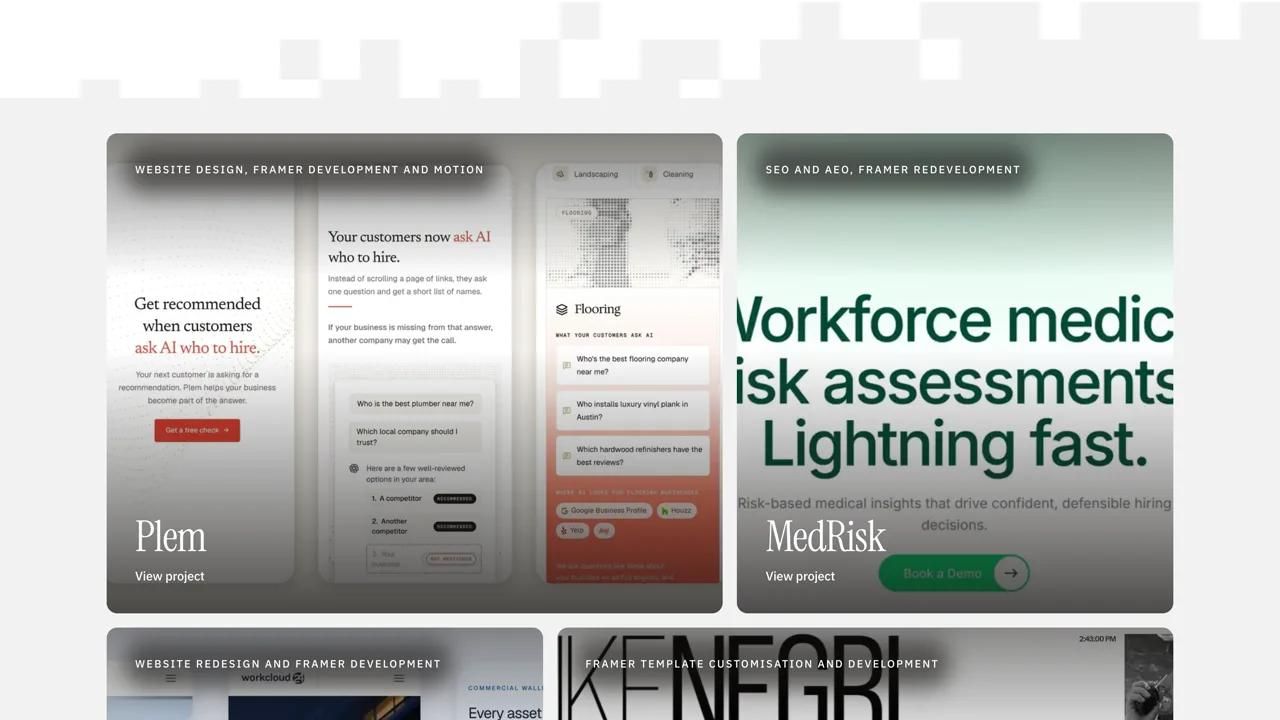
Shopify design and development, mobile apps, custom web app
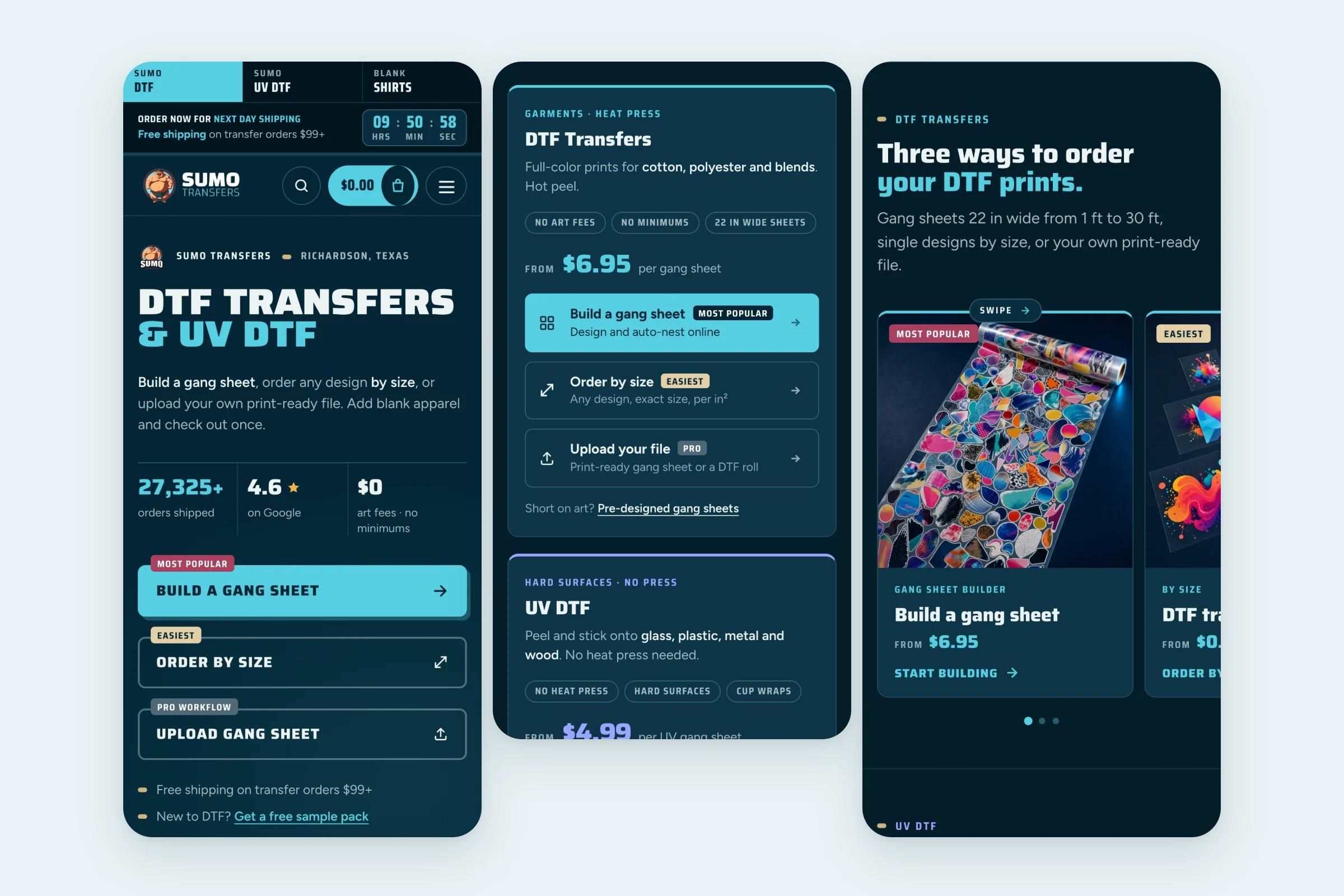
Shopify store, gang sheet builder, Klaviyo and Smile, Meta ads
Our custom build process
Timelines depend on scope, so we set them with you after architecture. Every stage has named outputs, and we decide the data model and structure before building rather than discovering it as we go.
Step 01
We define the data model, stack and structure, and agree the approach before any code is written.
Outputs
Step 02
We set up the Next.js project, environments, database and auth as the base everything builds on.
Outputs
Step 03
We build features in reviewable increments against the agreed scope, with integrations wired as we go.
Outputs
Step 04
We test, harden, check performance and security, then deploy with the handover your team needs.
Outputs
Tools and workflow
The tools this work runs on, grouped by the job they do. Only tools we use, never a partnership.
Common questions
Everything teams usually ask before the first call.
You need custom when the product has real application logic, custom data models, user accounts or integrations that a site builder cannot carry, and that is the work this service is for. If your project is a marketing site or a mostly content-driven site, a builder such as Framer is faster and cheaper to run, and we will say so. We will tell you honestly which side of that line your project sits on rather than sell you the larger build.
React and Next.js on the front end, Node on the back end, with the database and services chosen to fit the project. We favour a mainstream, well-supported stack so your build is easy to maintain and to hire for later. We agree the specifics during architecture rather than defaulting to whatever is fashionable.
Because the expensive mistakes in custom builds are structural, and they are far cheaper to fix on paper than in a running codebase. We define the data model and approach up front so the build is predictable and the cost does not drift. It also means you can review and agree the plan before committing to the full build.
One senior team, with no juniors, account managers or handoffs. The people who scope your architecture are the people who build it, which keeps context intact and decisions quick. At the end we hand over clean code and documentation so your team or another developer can take it forward.
More development services
See all development servicesFree tools
Next step
We define the data model, stack and structure first, set up the foundations, build features in reviewable increments on staging, then test, harden and deploy with the handover your team needs.
Cookies
We use analytics cookies to see which pages and links bring people to a call. Nothing is stored until you agree. Privacy policy
Hi, I'm Seru, Urest's assistant. Ask me about our services, process or work.
Try asking