What is a headless CMS?
A headless CMS is a content management system that stores and manages content but does not render the website itself. Content is delivered through an API to a separate front end, such as an Astro or Next.js site or a mobile app, so the presentation layer can be built with any technology.
Headless versus traditional
A traditional CMS such as WordPress manages content and also generates the pages from its own themes. A headless CMS removes that front-end layer and leaves developers to build it.
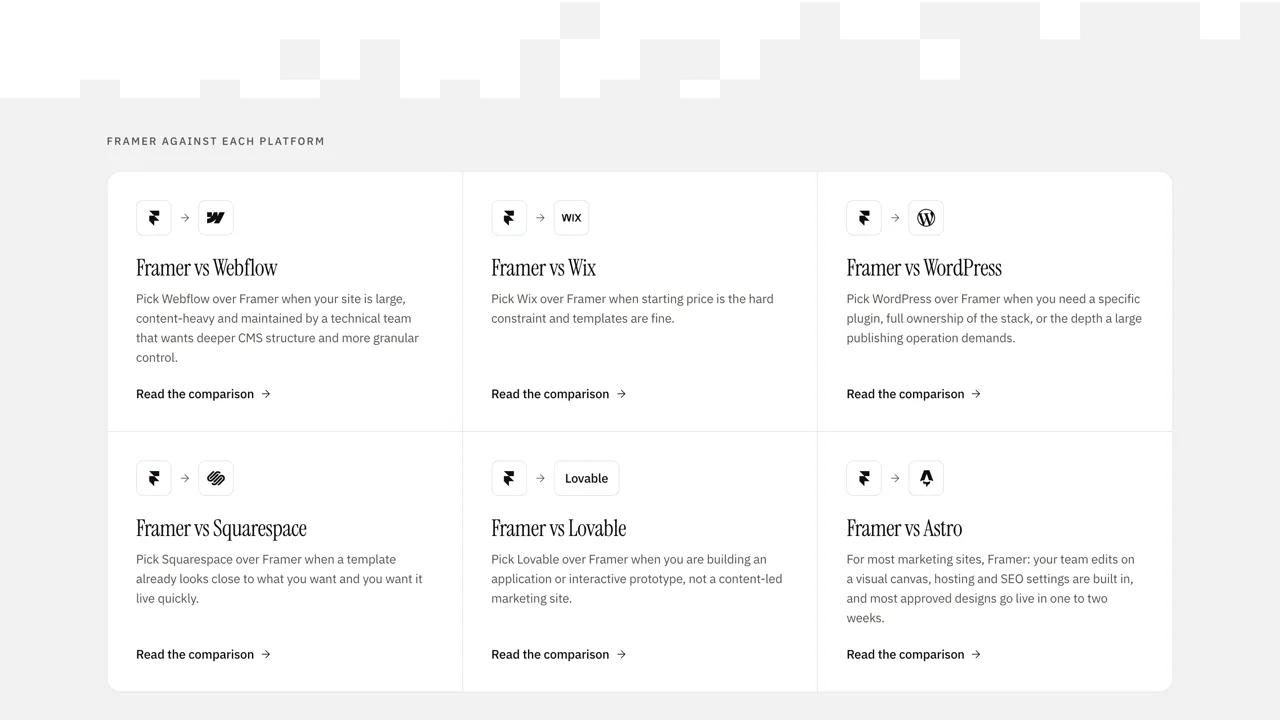
Website builders such as Framer and Webflow sit in between: the CMS and the front end come together in one tool.
Benefits
One content source can feed several channels, the front end can be built for speed with a static site generator, and editors keep a structured interface. Examples include Sanity, Contentful, Strapi and Storyblok.
Trade-offs
Someone has to build and maintain the front end, and previews, routing and SEO fields are part of that work rather than ready-made. For a small marketing site, a builder with its own CMS is often simpler.