The Real Pros and Cons of Building on Framer
Honest Framer pros and cons: fast design-to-publish and strong hosting, weighed against plan tiers, animation performance and platform lock-in.
 Written byMatt Gemi, Founder, Urest
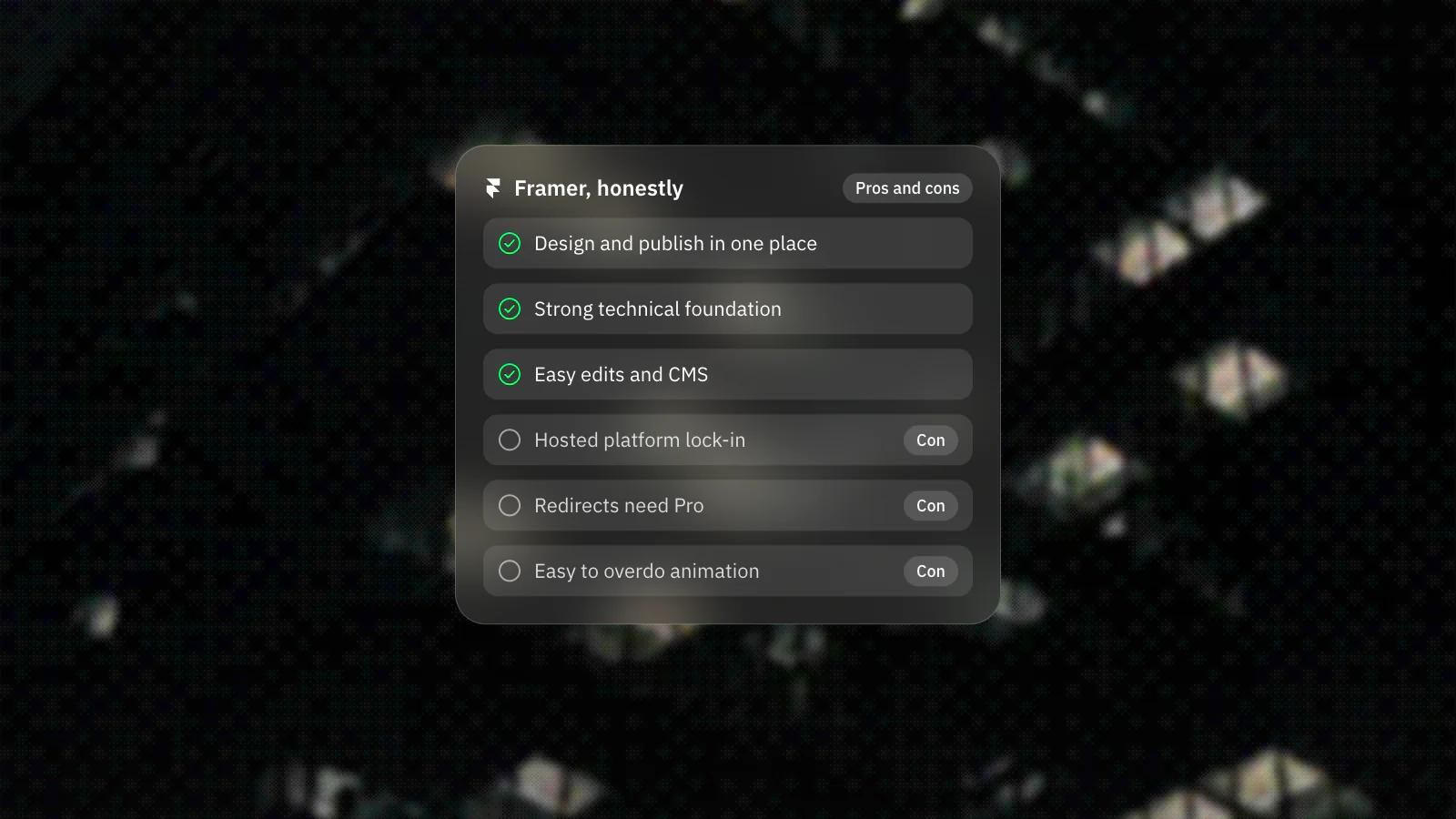
Framer's real pros and cons come down to a simple trade: you gain enormous speed and a genuinely good hosting foundation, and in exchange you accept a hosted platform with its own limits and pricing tiers. For marketing sites and landing pages that trade is usually a bargain. For a few specific cases it is not. Here is the honest version, without the sales gloss.
Pro: design and publish in one place
The biggest advantage is that there is no handoff. You design, build responsively and publish from the same tool, to a live URL, without exporting anything or standing up separate hosting. That collapses a workflow that traditionally spanned a designer, a developer and a devops step into one continuous process, which is why teams ship Framer sites in days rather than weeks.
Pro: is Framer technically solid?
Framer handles a lot of the boring, important infrastructure for you. Sites are server-side rendered and served through a global CDN with image optimisation built in, sitemap.xml and robots.txt are generated automatically, and you get per-page meta control and JSON-LD support. That means solid Core Web Vitals and clean SEO basics without wiring anything up yourself.
Pro: can non-developers edit the site?
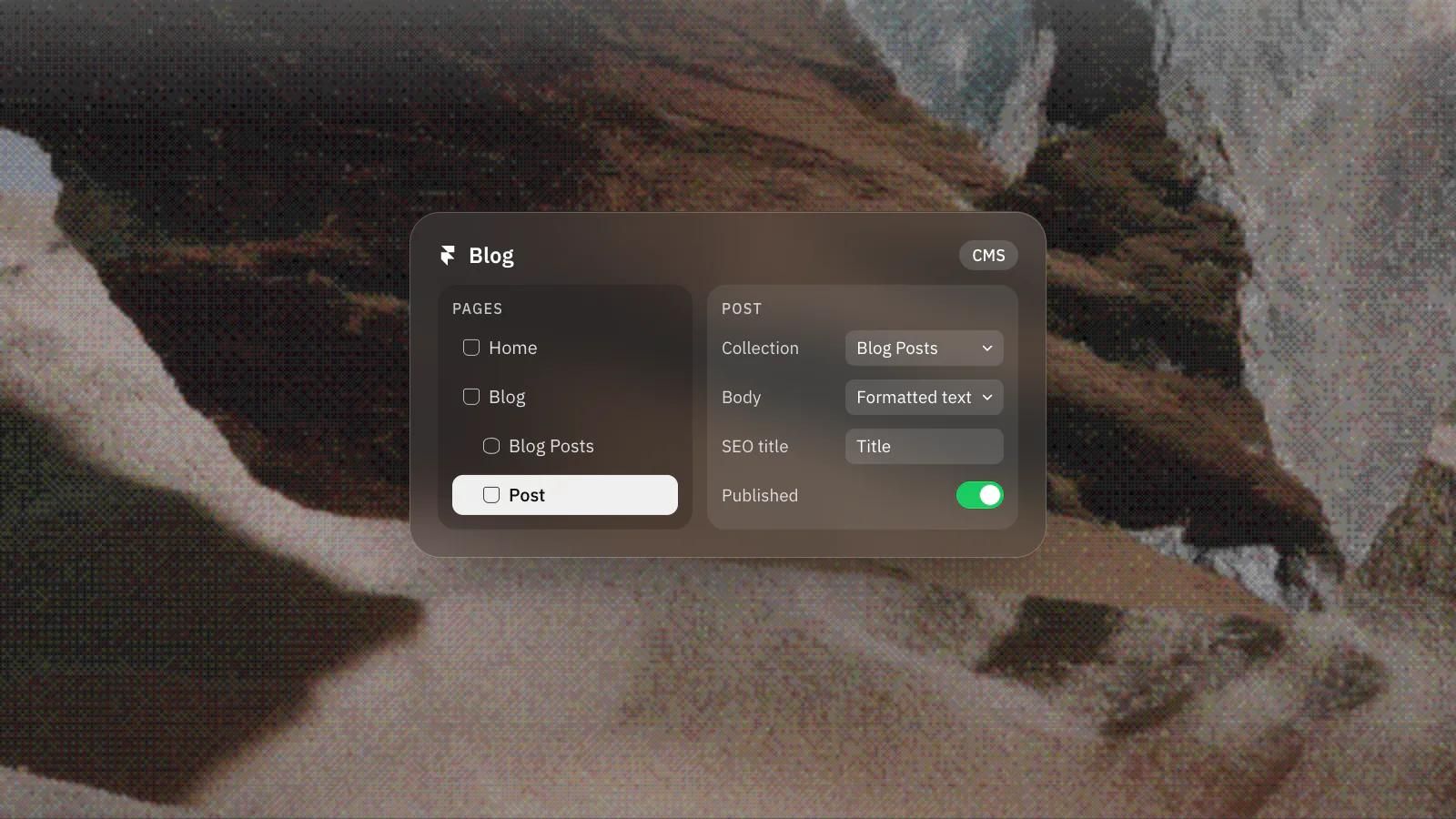
Non-developers can update copy, swap images and manage blog posts or case studies through the CMS without touching the layout or risking the build. For a small team that cannot dedicate a developer to every content change, that independence is worth a lot over the life of a site.
Con: how locked in are you on Framer?
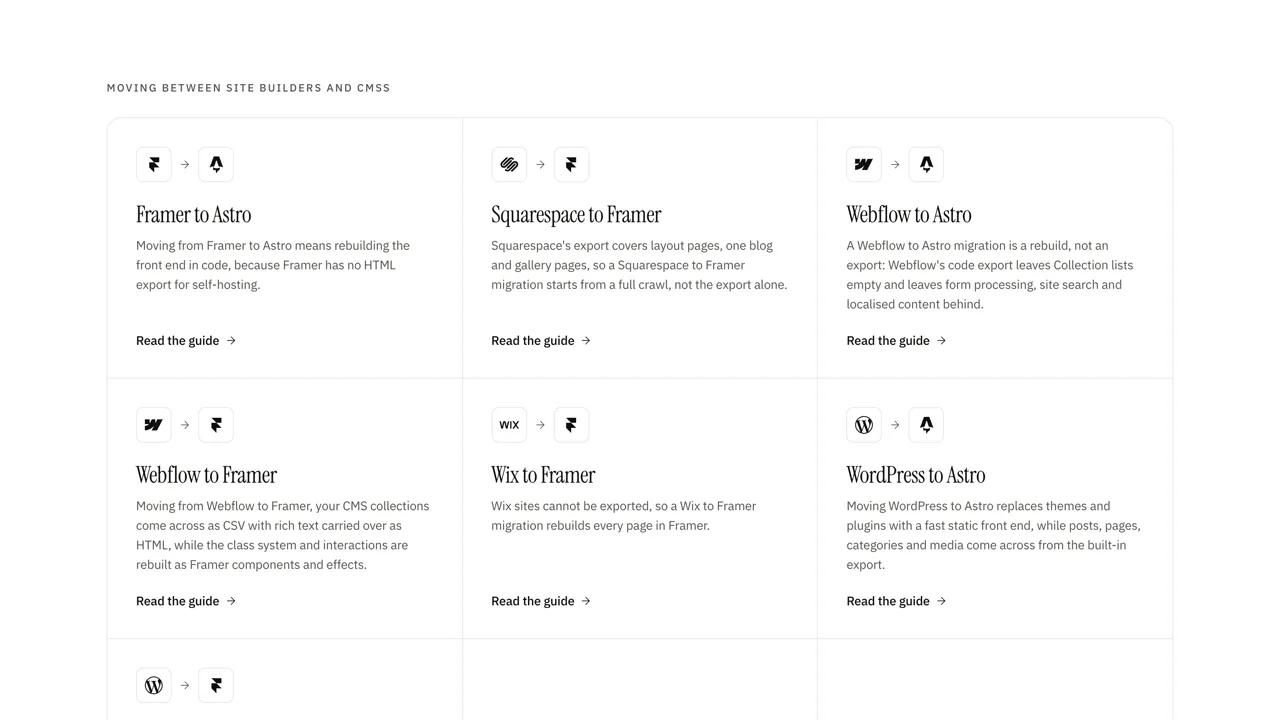
Fairly locked in. Framer hosts your site, and if you ever need to leave, moving a Framer site elsewhere is not a clean export. You build within what Framer supports and do not get raw server access. That lock-in is the honest cost of the convenience, and it is worth acknowledging up front rather than discovering later.
Con: which features need a higher plan?
The most notable feature gated by plan is redirects: Framer lists site redirects on the Pro plan, not on Basic, so a serious migration has a real minimum cost. Some other things you might assume are standard sit on higher plans too. It is not expensive in absolute terms, but budget for the tier your project actually needs instead of the entry price.
Con: can animation slow a Framer site down?
Yes. Overusing animations and heavy effects is one of the most common reasons a Framer site scores poorly on performance. Framer makes motion effortless, and that is double-edged. The platform can be fast, but it will happily let you make it slow. Restraint is a design decision you have to make on purpose.
When is Framer not the right choice?
If you are building a complex web application, need deep custom backend logic, or require full control over your hosting and infrastructure, a custom stack is the better call. We will say so when that is the case: at Urest, Framer is our default and our specialty as a Certified Framer studio, but we also build in Webflow and custom React and Next.js precisely so we can recommend the honest fit rather than forcing every project into one tool.
If you want a straight answer on whether Framer suits your specific project, or whether something else would serve you better, book a discovery call and we will give you our real opinion.
Frequently asked questions
Is Framer a good choice for a marketing site?
Usually, yes. You design, build responsively and publish in one tool, with hosting, a global CDN, an automatic sitemap and per-page meta handled for you.
Can I export my Framer site if I want to move later?
Not cleanly. Framer hosts your site and you do not get raw server access, so treat lock-in as the cost of the convenience.
Do I need a paid plan for redirects?
Yes. Site redirects sit on the Pro plan rather than Basic, so budget for Pro if you are migrating an existing site.
When should I choose something other than Framer?
When you are building a complex web application, need deep custom backend logic or require full control over your hosting and infrastructure.