
Fintech Website Design: Trust and Compliance-Friendly
Fintech website design that earns trust and stays compliance-friendly: clear value, honest claims, strong security signals, and a fast, accessible build.
 Written byMatt Gemi, Founder, Urest
On this page
Fintech website design has to solve a problem most sectors do not: you are asking people to trust you with their money, or with the systems that move it, often before they have ever heard of you. The site has to explain a genuinely complex product simply, project security and stability, and stay on the right side of financial marketing rules. That is a demanding brief, and it rewards clarity over spectacle.
How should a fintech website explain the product?
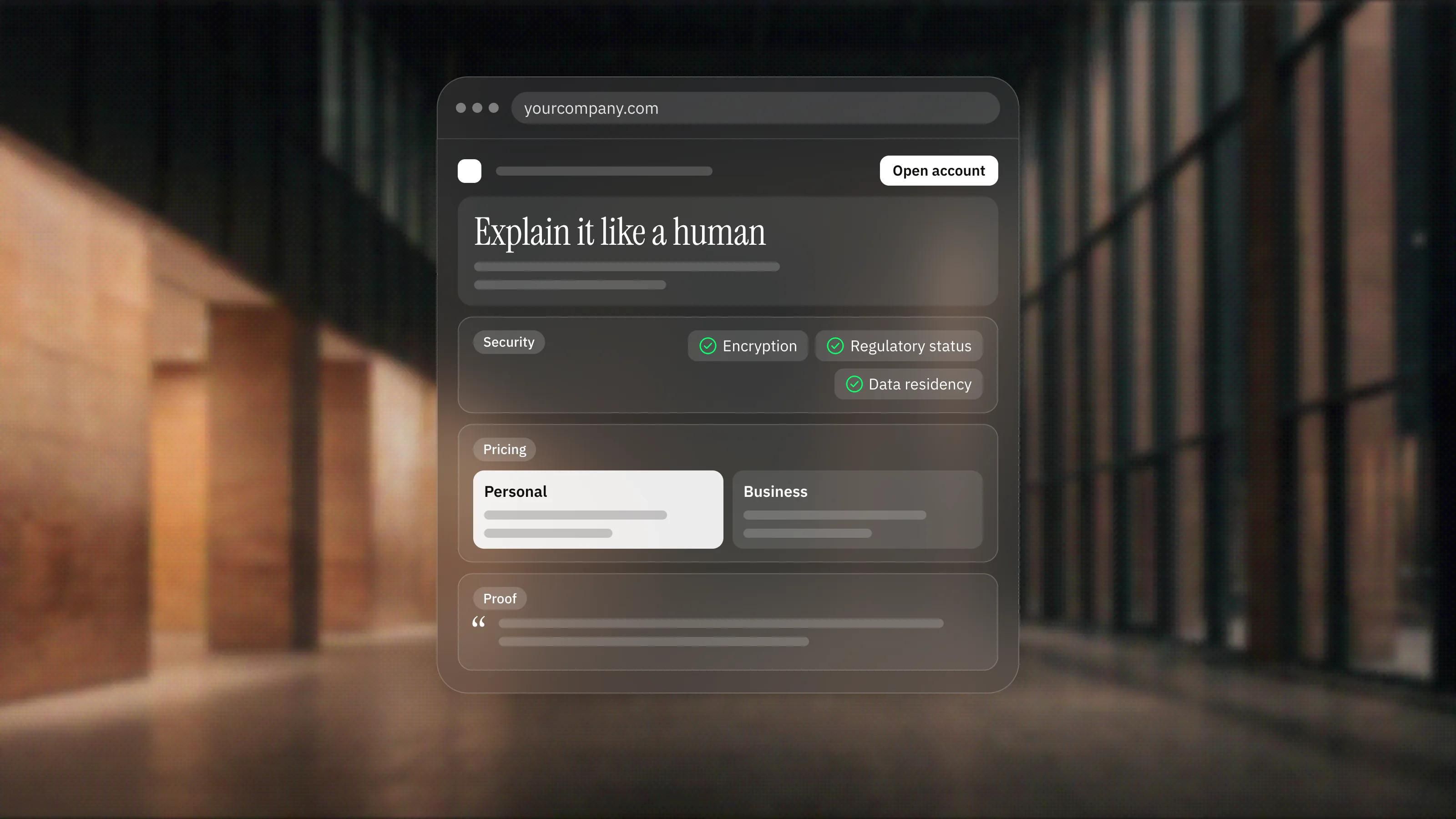
In plain language: what the product does, who it is for, and why it is better or safer than what visitors use now. Lead with the outcome, then let the interested reader go deeper. Fintech founders know their product deeply, which is exactly why their sites often overwhelm. A visitor does not need your architecture on the homepage.
Structure the depth carefully. A clean overview up top, then clear sections for how it works, security, and pricing, lets both a curious first-timer and a technical evaluator find what they need without wading through everything.
How do fintech websites signal security?
Trust in fintech is built from concrete signals. Show the safeguards you actually have: encryption, the security standards you meet, relevant certifications, and any regulatory status or partnerships you can legitimately reference. If your product touches card payments, understand the requirements of the PCI Data Security Standard from the PCI Security Standards Council and reflect that seriousness in how you present the product.
A professional, fast, error-free site is itself a trust signal. Broken links, slow pages, and sloppy copy tell a visitor that if you are careless here, you might be careless with their money. Polish is not vanity in fintech, it is evidence of competence.
How do you make a fintech site compliance-friendly?
Keep claims about returns, safety and outcomes accurate and evidenced, give required disclosures a natural, readable home, and confirm your exact obligations with qualified regulatory counsel.
Financial marketing is regulated, and the specifics depend on your product, licences, and market. Claims about returns, safety, and outcomes attract scrutiny, so keep them accurate, evidenced, and free of implied guarantees. Design the site so required disclosures and disclaimers have a natural, readable home rather than being bolted on later. We build sites, we do not provide legal or financial advice, so confirm your exact obligations with qualified regulatory counsel and build to meet them.
What mistakes undermine fintech websites?
Most come down to clarity and credibility: jargon before value, claims without evidence, thin security explanations, friction in sign-up and slow pages.
- A homepage crowded with jargon and features before the core value is clear.
- Bold claims about returns or safety with no evidence and no disclosure.
- Security handled as a single trust badge instead of a clear, honest explanation.
- Sign-up or demo flows with so much friction that qualified leads drop off.
- Slow, heavy pages that read as fragile to a security-minded visitor.
What makes a fintech website convert?
Fintech conversion comes from clarity plus credibility. A fast, accessible, well-structured page, a simple explanation of the product, honest and specific trust signals, and a low-friction path to sign up or book a demo will outperform flashy design. Reducing perceived risk at every step is the whole game.
A Framer-first build fits fintech well when paired with the right engineering. Framer lets us ship a fast, polished, responsive marketing site quickly and keep it easy to update as the product and its messaging evolve. For the application itself, gated flows, or heavier integrations, we build custom with React and Next.js, and we also work in Webflow when it suits, always honest about which tool the job needs. As a Certified Framer studio with more than seven years of work, a senior team, and no handoffs, we keep design, development, and growth under one accountable roof.
If you want a fintech site that reads as clear, credible, and built with care, book a discovery call and we will work through the details.
Frequently asked questions
What trust signals should a fintech website show?
The safeguards you actually have: encryption, the security standards you meet, relevant certifications, and any regulatory status or partnerships you can legitimately reference.
Can a web studio tell us what our disclosures must say?
No. We build sites, we do not provide legal or financial advice. Confirm your exact obligations with qualified regulatory counsel, and we design the site so required disclosures have a natural, readable home.
Is Framer suitable for a fintech website?
For the marketing site, yes: it lets us ship a fast, polished, responsive site quickly and keep it easy to update. For the application itself, gated flows or heavier integrations, we build custom with React and Next.js.
Why does site speed matter for fintech?
Slow, heavy pages read as fragile to a security-minded visitor. A professional, fast, error-free site is itself a trust signal.