
Your B2B Website Is a Due Diligence Tool, Not a Lead Machine
By the time someone opens your B2B website, they usually already know you exist. The site's job is to survive scrutiny, not create demand.
 Written byMatt Gemi, Founder, Urest
On this page
A B2B website's main job is not to generate demand. It is to survive scrutiny. By the time someone lands on your site, they usually already know you exist (a referral, a search, a name dropped in a Slack thread), and they are there to decide whether you are worth a meeting. Build for that decision and most other decisions get easier.
That reframing changes what you build, what you write, and how you measure it. Here is how.
What is a B2B website actually for?
It exists to move someone who already has a problem from maybe these people to let's talk. Not awareness. Not traffic. That specific transition.
B2B buying is committee work done in private. Gartner's research on B2B buying has found that buyers spend only a small share of their buying time meeting potential suppliers at all, and that time is split across every supplier on the list. Most of the evaluation happens in rooms you are not in. Your site is what represents you in those rooms. It gets forwarded to a CFO who has never heard of you. It gets skimmed on a phone between meetings. It gets opened in a browser tab next to two competitors.
The practical consequence: every page has to make sense out of context. There is no guaranteed entry point, no reliable journey from homepage to case study to contact. Someone will land on a service page from search, read four hundred words, and decide. Write every page as if it is the only one they will see.
Why do most B2B websites fail?
Not because they look bad. Because they are vague. Vagueness is the single most common failure in B2B web, and it survives redesign after redesign because nobody bills it as a problem.
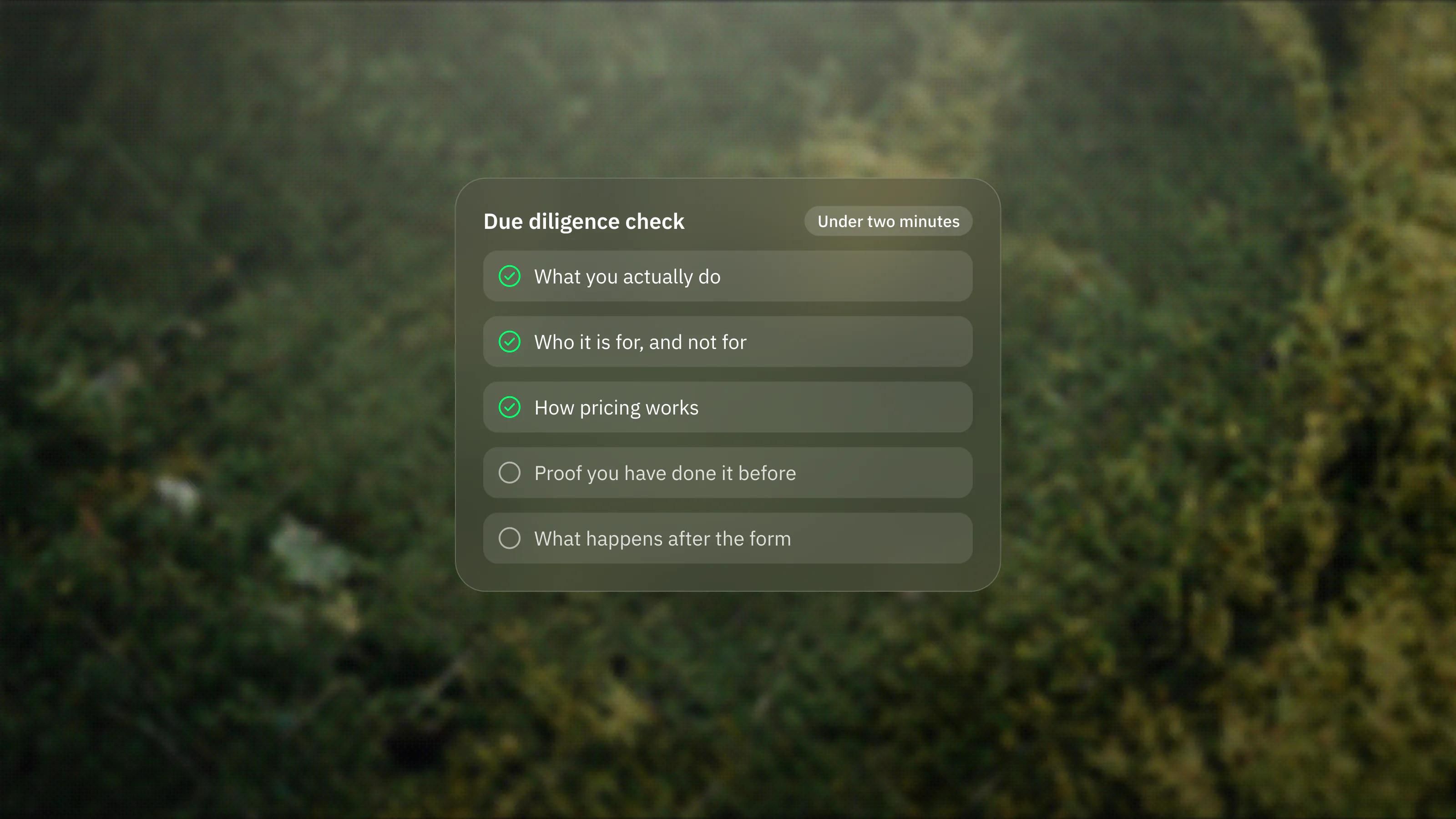
A website's job is to work, not just to look finished. Working means a stranger can answer these questions in under two minutes:
- What do you actually do, in nouns, not outcomes
- Who is it for, and just as importantly, who is it not for
- How does pricing work, even if you cannot publish numbers
- What proof exists that you have done this before
- What happens if I fill in this form
Most B2B sites answer one or two of these and gesture at the rest. The gesturing is usually deliberate: teams avoid specifics because specifics disqualify people. But disqualification is the point. A form fill from someone who was never going to buy costs your sales team more than it earns you.
What should a B2B website strategy start with?
With the sales conversation, not the sitemap. Everything else follows from that.
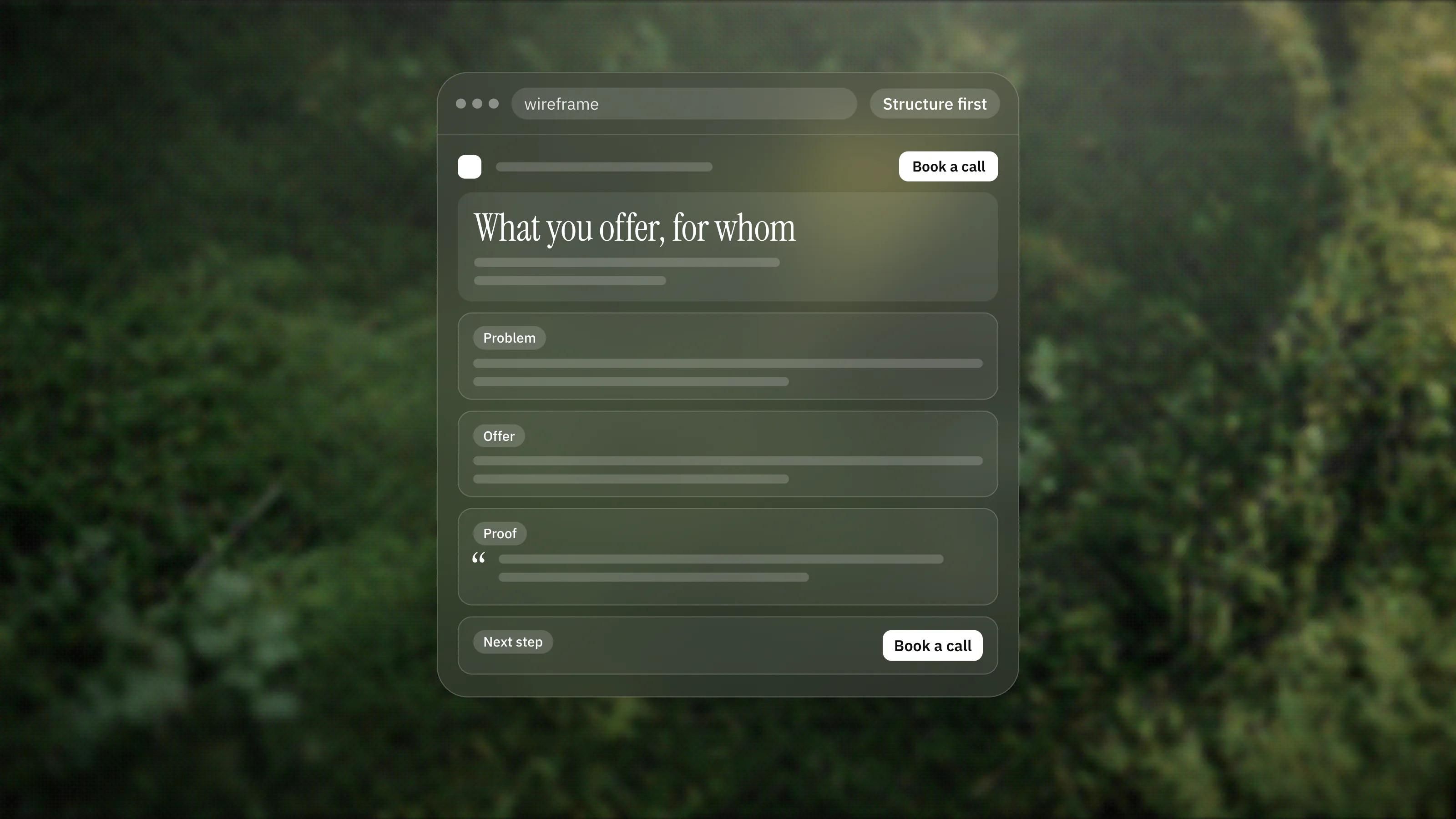
The most useful exercise we run at the start of a project takes an afternoon: write down the ten questions your best prospects actually ask, in their words, and the three objections that most often kill a deal. Then write down what your sales team says in response. That document decides most of your information architecture on its own. Sections that do not answer a real question or handle a real objection are decoration.
A B2B website strategy that never touches objection handling is not a strategy. It is a wish list with a Gantt chart attached. Publishing pages without that grounding just adds noise to a site that already had too much.
The second thing to decide early is the primary conversion. Not a list of five. One. Demo, call, quote, download: pick the one that maps to how deals actually start for you, and let every page carry a route to it. Sites with five equally weighted CTAs convert on none of them.
Where does B2B branding fit into this?
B2B branding is not the logo. It is whether you look like a company a buyer can safely recommend to their boss.
That is the real dynamic. In B2B, the person choosing you carries personal career risk. Nobody gets fired for the safe pick. So the job of your brand is less about being memorable and more about being coherent: the site, the deck, the proposal, the invoice, and the way your team writes emails all reading as one organisation that has its act together. Incoherence reads as instability, and instability reads as risk.
There is a real tradeoff here and it is worth naming. Distinctive brand work (strong art direction, unusual typography, motion) buys attention but can cost clarity. In categories where everyone looks identical, that trade is usually worth making. In categories where the buyer is nervous and the purchase is large, it often is not. Decide which one you are in before your designer opens Figma, not after.
What do good B2B web design services actually deliver?
A system your team can run without calling anyone. Not a set of pages.
The difference shows up three months after launch. Marketing wants a landing page for a campaign. If that needs a developer ticket, a sprint, and a deploy window, the campaign either ships late or ships on a page that does not match the site. Multiply that by a year and you have a website that slowly drifts out of alignment with the business.
So the deliverable that matters is the component library, the CMS structure, and the documentation that lets a marketer build a credible new page in an afternoon. Ask any agency you are evaluating to show you that layer, not just the homepage mockup.
The other structural issue is handoffs. The standard model (strategy agency, then design studio, then dev shop, then a growth consultant) loses something at every seam. Intent gets diluted, technical constraints arrive too late to inform the design, and nobody owns the number at the end. We run design, development and growth as one team for exactly this reason. We think like marketers and build like engineers, which mostly means the person arguing for a section has to also build it and then live with its performance.
Framer, Webflow, or custom code?
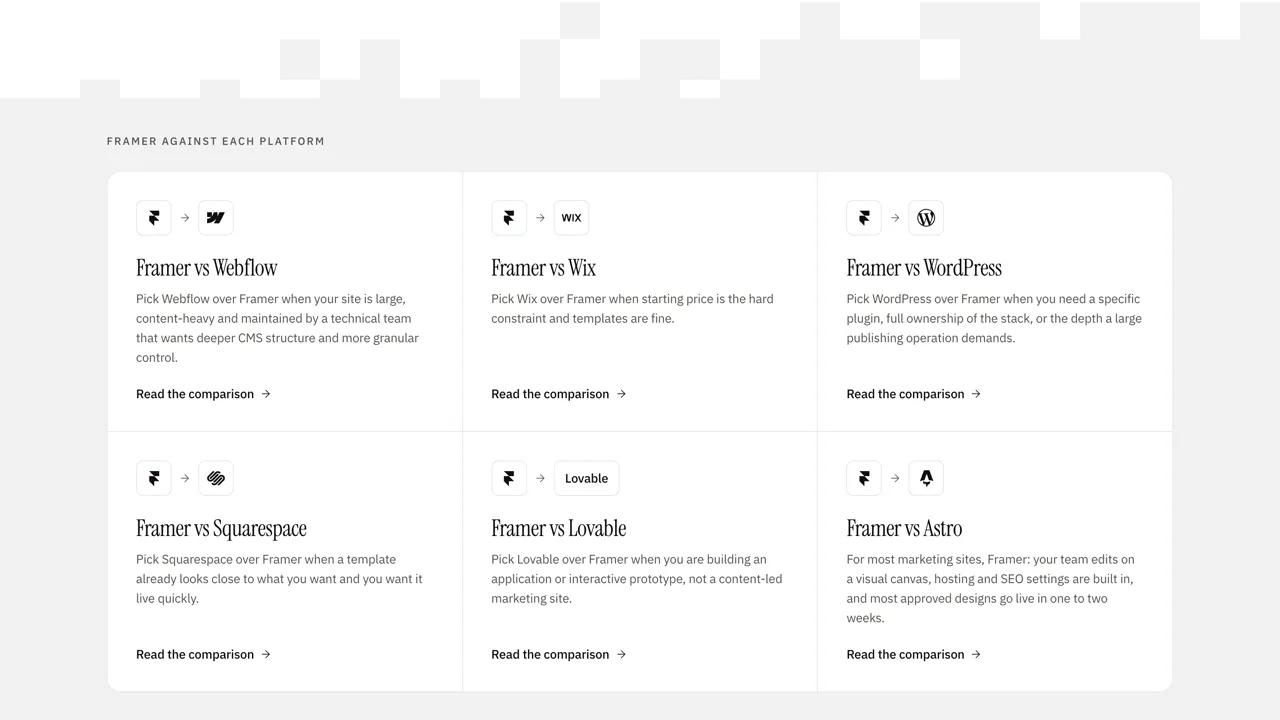
Pick based on who maintains the site after launch, not on what the platform can theoretically do. All three can build something good.
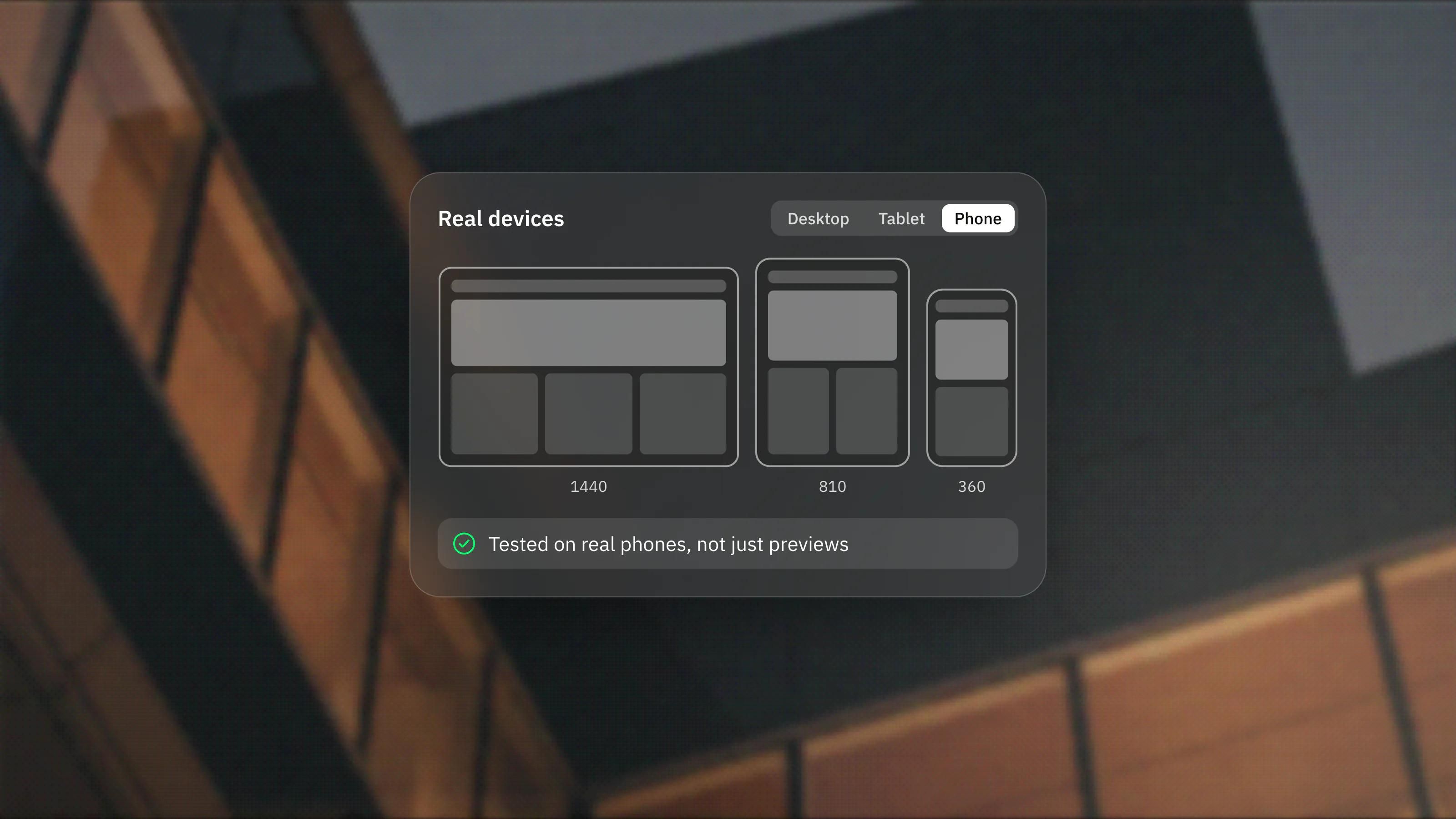
As a rough guide: Framer suits marketing sites where a small team needs to ship changes quickly and design fidelity matters. It is the fastest path from idea to live page. Webflow earns its complexity when you need deeper CMS relationships, heavier localisation, or an established ecosystem of integrations. Custom React or Next.js makes sense when the website is genuinely part of the product: authenticated areas, real-time data, complex application logic.
The wrong reason to choose any of them is that your agency prefers it. We are a certified Framer studio and we still talk clients out of Framer when the requirements point elsewhere. Ask whoever you hire to explain the case against their recommendation. If they cannot, they are selling capacity, not judgement.
How do you know whether the new site worked?
Decide the metrics before launch, and make them commercial. Numbers matter more than adjectives here.
Sessions and bounce rate will not tell you anything useful. Qualified conversations started, pipeline sourced from organic, demo-to-close rate on inbound leads, and time from first visit to first meeting will. Record the baseline before you touch anything, because after launch you will not be able to reconstruct it.
One technical warning that costs companies real money: if you are rebuilding on new URLs, map your redirects before launch, not after. Losing accumulated search visibility is the most common way a genuinely better website produces a worse quarter. It is entirely avoidable and routinely not avoided.
Frequently asked questions
How long should a B2B website project take?
In our experience, the timeline of a focused marketing-site rebuild depends mostly on content, and it holds best when content is written in parallel rather than after design. The delays are almost never technical. They come from content approvals and from unresolved positioning questions surfacing halfway through design. Settle your messaging before the build starts and the timeline holds.
What is the difference between B2B and B2C website design?
B2C design optimises for a single person making a fast, often emotional decision. B2B design optimises for a group making a slow, defensible one, which means more specificity, more proof, and content that survives being forwarded to someone who has no context. B2B sites also need to serve multiple roles at once: the practitioner who evaluates, the executive who approves, and the procurement contact who checks the details.
Does a B2B website need a blog?
Only if you will actually maintain it. An abandoned blog with a two-year-old last post actively damages credibility, and thin, generic AI-written articles are easy to spot and easy to ignore. If you cannot commit to publishing something genuinely useful on a regular cadence, invest that budget in deeper service pages and better proof instead.
Should we redesign or improve what we have?
Improve first if your problem is conversion, messaging, or specific weak pages, since those are cheaper to fix in place and you learn faster. Redesign when the underlying structure blocks you: when your team cannot ship pages without developers, when the information architecture no longer matches what you sell, or when the site is built on something you cannot maintain. Structural problems do not respond to copy changes.
If you are weighing a rebuild, the most useful first step is not a design brief. It is writing down the ten questions your buyers ask and checking honestly whether your current site answers them. Most of the time, that document tells you what to do next.