







What Is llms.txt and Should Your Site Have One
llms.txt is a proposed file for helping AI tools read your site. Here is what it really is, its status, and whether your site actually needs one.
 Written byMatt Gemi, Founder, Urest
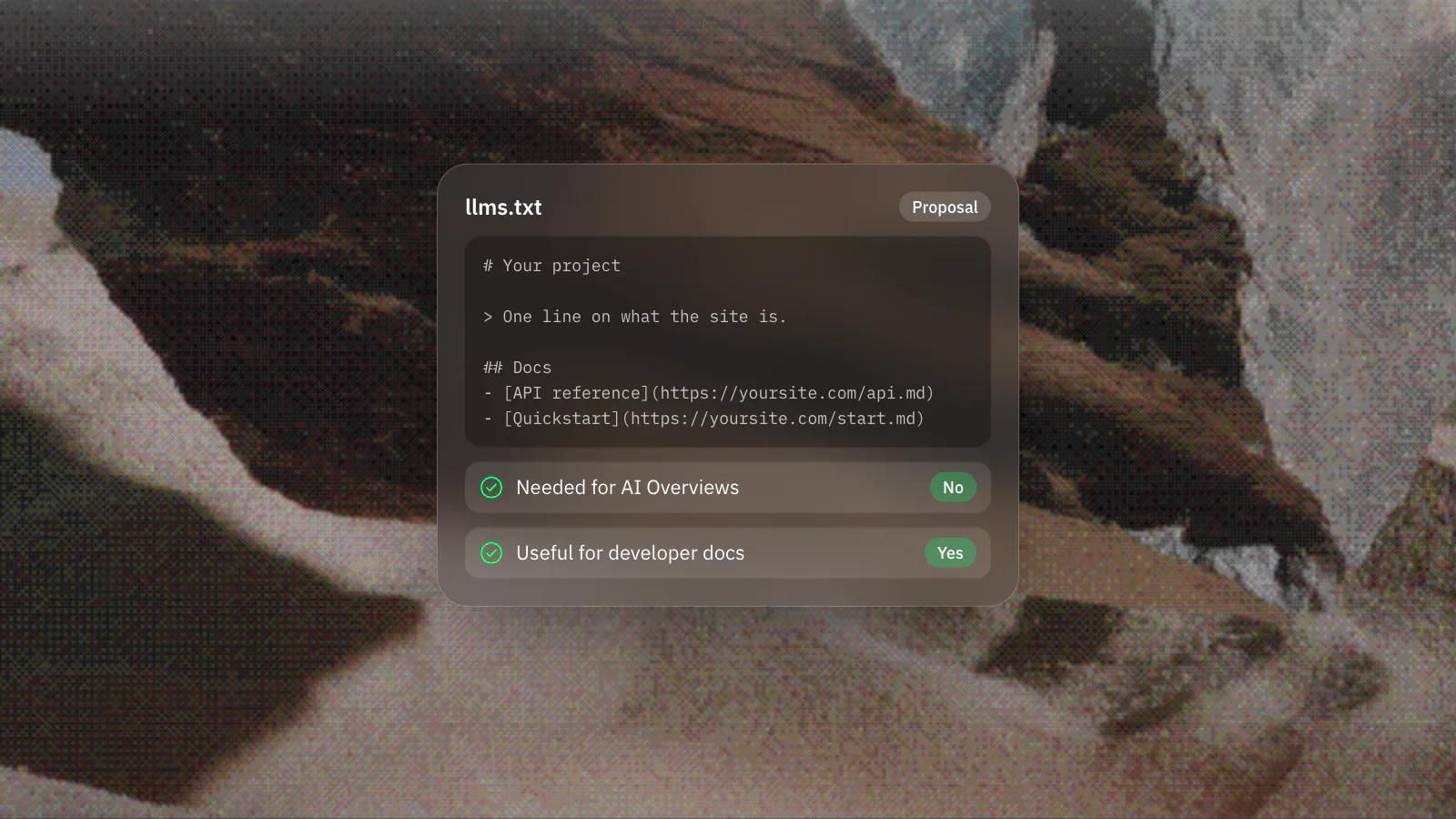
llms.txt is a proposed file you place at the root of your site that points AI tools to clean, structured versions of your key content. It was designed to help language models find and read the important parts of a site without wading through navigation, ads and scripts. It is a community proposal, not an official standard, and its usefulness depends heavily on what your site is.
Who created llms.txt, and why?
The idea was proposed in September 2024 by Jeremy Howard of Answer.AI, on the site llmstxt.org. The problem he set out to solve was practical: model context windows are limited, and converting a full HTML page with menus and JavaScript into clean text for a model is error prone. An llms.txt file offers a curated, Markdown style map of a site's most useful pages so a model can grab the right content efficiently.
Is llms.txt an official standard?
No. llms.txt is a proposed convention, not a ratified standard, and its own site describes it as a proposal. More importantly for most site owners, Google's guidance on AI features says you do not need to create new machine readable files or AI text files to appear in AI Overviews or AI Mode. So if your goal is Google AI Overviews visibility, an llms.txt file is not something Google asks for.
Treat any claim that llms.txt boosts your rankings with real caution. Google's documentation does not list it as a requirement or a signal, so there is no official basis for that promise.
Who is llms.txt actually useful for?
The strongest use case is developer documentation. The proposal itself says llms.txt files are used most heavily for software documentation, where coding agents use them to find API references and tutorials with less wasted context. OpenAI's own developer docs, for example, point to an llms.txt index. If you publish technical docs or an API reference, it can be worth having.
Should your site have an llms.txt file?
For a marketing or brand site, probably not. If you publish developer documentation or an API, it is a reasonable, low cost addition. Here is the straight answer:
- If you run a marketing or brand site and your aim is search or AI Overview visibility, llms.txt is not a priority and will not move those needles.
- If you publish developer documentation or an API that AI coding tools consume, it is a low cost, reasonable addition.
- Either way, it is optional, harmless if well formed, and no substitute for crawlable pages and helpful content.
The bottom line
llms.txt is a genuinely interesting proposal with a narrow, real use case in developer tooling, and a lot of overstated marketing around everything else. Do not let anyone sell it to you as an AI ranking shortcut, because Google's guidance says you do not need AI text files to appear in its AI features.
If you are unsure whether your site would benefit or you just want the fundamentals done right, that is the kind of question we work through at Urest across Framer, Webflow and custom builds. Book a discovery call and we will give you a straight read.
Frequently asked questions
Does llms.txt help my site rank in Google?
No. Google's guidance for its AI features says you do not need to create AI text files to appear in AI Overviews or AI Mode, and it does not list llms.txt as a signal.
Where does an llms.txt file go?
The proposal places a Markdown file called llms.txt at the root of your site. It gives AI tools a curated map of your most useful pages.
Is llms.txt worth adding for developer documentation?
It can be. Coding agents use llms.txt files to find API references and tutorials, so for technical docs it is a low cost, reasonable addition.
Is llms.txt an official web standard?
No. It is a community proposal published on llmstxt.org in September 2024, not a ratified standard.